
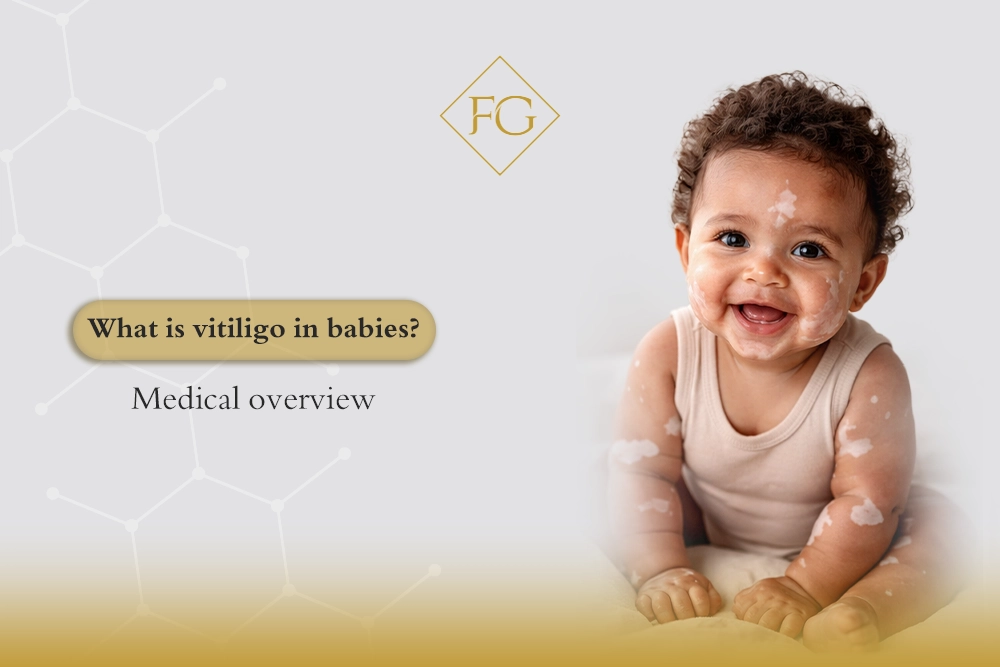
What is vitiligo in babies? This question often worries parents noticing pale patches on their infant’s skin. Understanding these pigment changes is the first step toward peace of mind. While usually painless, navigating childhood skin conditions in Dubai requires elite dermatological expertise to ensure a future of healthy, even-toned skin for your little one.
Identifying the early signs and symptoms of infant vitiligo
Recognizing pigment loss in infants requires a professional evaluation to distinguish it from other newborn markings.
When exploring what is vitiligo in babies?, look for specific indicators like:
- Milky-white macules appearing first on the face, neck, or hands.
- Distinct borders that may appear slightly inflamed before pigment fades.
- Early whitening of hair follicles, eyelashes, or eyebrows near patches.
- Symmetrical patterns appearing on both sides of the infant’s body. (watch this video)
Common causes and triggers for pigment loss in newborns
Modern research points toward biological triggers affecting melanin production in infants.
Providing a comprehensive answer to what is vitiligo in babies? and Can vitiligo spread involves analyzing these delicate factors:
- Genetic predisposition linked to a family history of autoimmune conditions.
- Internal immune responses mistakenly attacking the child’s pigment-producing cells.
- Oxidative stress within skin cells exacerbated by environmental factors.
- Neural factors causing segmental patches along specific infant nerve pathways.
The importance of a specialized dermatological diagnosis
Early intervention is essential for managing a child’s skin health with sensitivity in Dermatology clinic
To fully address what is vitiligo in babies? Our specialized approach ensures precision through:
- Wood’s lamp examinations to visualize hidden pigment loss areas.
- Clinical differentiation from common infant conditions like Pityriasis Alba.
- Expert stability assessment before considering any gentle therapeutic pathways.
- Parental education on protecting vulnerable depigmented areas from sun damage.
Why choose Dr. Faiez Ghanam Center to understand what is vitiligo in babies?
Choosing the right partner for your child’s skin is a decision rooted in trust and the need to know what is vitiligo in babies?
At Dr. Faiez Ghanam Center, we provide:
- Expert pediatric dermatology consultations led by Dr. Faiez Ghanam personally.
- Conservative management strategies tailored for an infant’s developing immune system.
- Advanced diagnostic tools ensuring clear explanations from the very first visit.
- A private, family-friendly environment in Dubai respecting your child’s comfort.
- Specialized follow-up protocols to monitor pigment stability and long-term health. (Watch this video)
Frequently Asked Questions about Infant Vitiligo
Is the condition painful for my child?
No, it is strictly a pigment change and does not cause physical pain.
Can what is vitiligo in babies? be cured?
Many infants respond well to gentle management that stabilizes the skin naturally.
Is it contagious?
Absolutely not; it is an internal condition and cannot be spread through touch.
Will the patches spread?
Progression varies individually, making professional monitoring vital for your baby’s growth.
Conclusion
Navigating what is vitiligo in babies? requires a partner who values scientific accuracy and your child’s comfort. At Dr. Faiez Ghanam Center, we are dedicated to providing expert care for your infant’s skin journey.
Book your consultation today to protect your child’s skin with world-class expertise in Dubai.