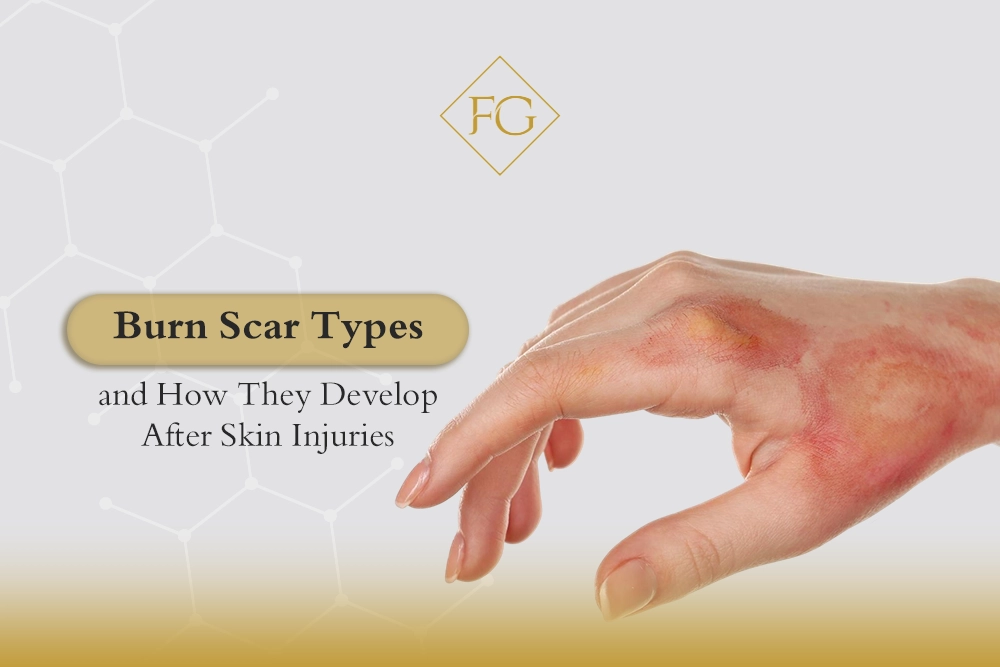
Understanding different burn scar types is the first vital step toward addressing the tight, raised, or uneven patches that form after your skin heals from a heat injury. Discovering these noticeable texture shifts on your face or body can cause daily physical discomfort and reduce your social confidence in Dubai. Fortunately, choosing specialized non-surgical care can significantly soften this tough tissue and safely restore your skin’s natural flexibility.
Structural Identification: Recognizing the Main Burn scar types
Deep skin injuries can disrupt how your body rebuilds its elastic support fibers, creating varying structural patterns as the area slowly mends. Recognizing these unique physical changes helps you identify the specific characteristics defining your individual burn scar types.
Common structural variations left by heat injuries:
- Contracture bands create a tight, restricted surface layer that can pull the surrounding skin and limit comfortable movement.
- Raised hypertrophic tissue develops within the exact borders of the initial injury as thick, firm red patches.
- Darker and Old burn scars keloid formations continue growing beyond the original boundary lines, creating large and bulky structural textures.
- Smooth atrophic depressions appear as thin, slightly sunken patches where underlying soft support fat was lost completely.
Targeted Reconstruction: Safe Clinical Management for Various Burn scar types
Advanced medical devices to Burn scar healing use gentle, non-invasive energy to carefully relax tight structural fibers and smooth down thick, raised areas over time. Applying these state-of-the-art dermatological protocols guarantees highly predictable texture refinement tailored precisely to your specific burn scar types.
Top clinical solutions for softening tough tissue:
- Fractional light resurfacing safely vaporizes thick outer layers to encourage smooth, natural skin regeneration in
- in Skin Clinic
- Localized cooling therapies and custom pressure routines help flatten raised tissue bands and reduce redness.
- Softening medical micro-injections deliver focused calming agents directly into firm scars to release internal tightness.
- Tailored deep-tissue stimulation encourages the underlying fibers to remodel into a highly flexible plane. (Watch this video).
Ongoing Assessment: How Burn Scar Types Change Over Time
The appearance of Burn Scar types can change considerably as the healing process progresses, making long-term assessment an important part of scar management.
A scar may gradually become flatter, softer, or less noticeable, while some scars can remain raised, firm, or increasingly restrictive as the tissue matures.
Changes in color, thickness, flexibility, and sensitivity can provide useful indicators of how the scar is developing.
Regular dermatological or surgical follow-up allows these changes to be monitored and helps determine whether the existing management plan remains appropriate.
Early attention to unfavorable changes may also provide an opportunity to adjust care before the scar becomes more difficult to manage.
Why should you choose Dr. Fayez Ghannam Center for effectively treating and smoothing all burn scar types?
Our center avoids generic peelings, focusing on high-precision checks of your tissue thickness. By combining Dr. Fayez Ghannam’s global expertise with his International and European Societies memberships, we design customized plans that gently relax contractures and flatten raised tissue while fully protecting your skin barrier, securing natural-looking results in Dubai. (Watch this video)
Our specialized clinical advantages for injury recovery:
- High-accuracy tissue mapping to determine the exact depth and structural stability of your marks before Scar Treatment.
- Calibrated medical lasers adjusted carefully to protect sensitive skin types against any secondary pigment risks.
- Specialized medical-grade post-care routines configured to accelerate skin softening comfortably in hot weather.
- Continuous expert monitoring across every session to ensure your skin recovers its optimal, long-term elastic balance.
Conclusion
In conclusion, managing various burn scar types through advanced, non-surgical medical protocols is the most reliable way to restore your skin’s smooth comfort and appearance. Trusting an elite, internationally recognized specialist ensures you receive gentle, high-safety care that restores your natural beauty and daily confidence completely.
Relax your skin’s tight textures and step past old injury marks; book your dedicated consultation at Dr. Fayez Ghannam Center today.
Phone / WhatsApp: +971 50 135 0453
Address: Beach Road – Dubai.
Working Hours: Daily from 9:30 AM to 9:00 PM (Friday: Closed).
FAQ
Which specific burn scar types respond best to advanced non-surgical clinical treatments?
Raised hypertrophic patches and tight contracture bands respond exceptionally well to modern laser and softening therapies, which safely relax the firm tissue and restore natural skin flexibility.
How long does it take for a thick, tight mark to feel softer during clinical care?
Most patients feel a noticeable release of surface tightness within a few weeks, with continuous smoothing happening over several months.
Are laser therapies for raised injury marks safe for darker skin tones?
Yes, using modern calibrated wavelengths under expert medical supervision ensures optimal safety without causing any skin irritation or rebound spots.
How many clinical sessions are generally required to improve skin flexibility?
Excellent and lasting structural improvement is typically achieved across four to six regular office visits tailored to your specific tissue thickness.