
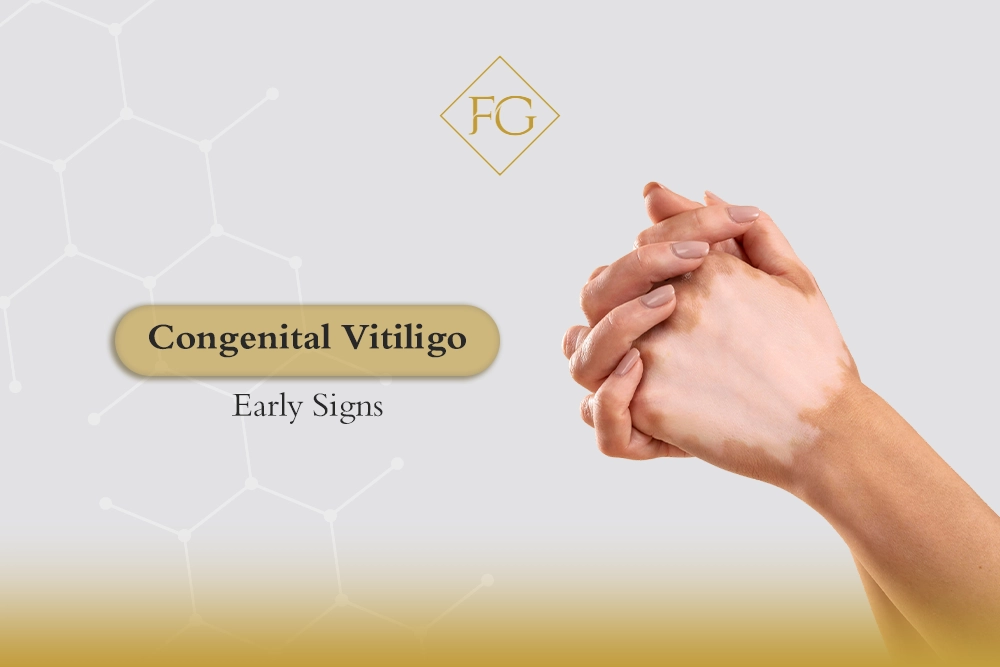
Congenital vitiligo is a rare form of pigment loss that appears at birth or very shortly after, presenting unique challenges for parents concerned about their child’s skin development. We understand the worry that comes with noticing pale patches on a newborn, especially when you seek a future of clear, healthy skin for them. In Dubai, we offer the expert dermatological guidance needed to monitor these early changes, ensuring your child receives the most sophisticated and natural care available from day one.
Recognizing the First Signs of Pigment Loss
Identifying congenital vitiligo in its earliest stages requires a keen eye for subtle variations in skin tone that might otherwise be mistaken for simple birthmarks. Early detection is vital for stabilizing the condition and understanding the progression of depigmentation, allowing for a proactive medical approach that respects the delicate nature of a developing child’s skin.
Common Early Indicators:
- Distinct chalk-white patches that are present on the skin from the moment of birth.
- Well-defined borders between the depigmented areas and the surrounding natural skin tone.
- Localized patches that often appear on the trunk, limbs, or face in a stable pattern.
- Occasional patches of white hair, known as poliosis, within the affected skin areas.
Differentiating Congenital Patches from Other Conditions
Can vitiligo spread? Because congenital vitiligo can mimic other neonatal skin conditions, a professional assessment is essential to rule out similar-looking marks like nevus depigmentosus. Our diagnostic process focuses on a deep understanding of pediatric skin biology, ensuring that your peace of mind is built on clinical accuracy rather than guesswork or generic online information.
Key Diagnostic Features:
- Stability of the white patches over time, which often distinguishes this from acquired vitiligo.
- Lack of sensory changes or texture differences in the pale areas of the skin.
- Use of specialized Wood’s lamp examinations to confirm the complete absence of melanin.
- Observation of the symmetrical or segmental distribution that characterizes viral pigment loss.
Proactive Management for Long-term Skin Health
Developing a management plan for congenital vitiligo focuses on “sustainability” and protecting the skin’s integrity as the child grows within Dubai’s intense environmental conditions. We emphasize non-invasive strategies that support the skin’s natural resilience, ensuring that any intervention is as gentle as it is effective for long-term aesthetic and biological health.
Gentle Care Strategies:
- Strict application of pediatric-grade mineral sunscreens to prevent burns on pigment-free areas in Dermatology clinic
- Regular monitoring of patch borders to track any potential expansion during growth spurts.
- Use of specialized camouflage techniques for older children to boost confidence in social settings.
- Nutritional guidance to support the immune system’s role in maintaining healthy skin cells. (Watch this video)
Why Choose Dr. Fayez Ghanam Center for the Management of Congenital Vitiligo?
Managing newborn pigment conditions in Dubai demands a clinical partner who combines international academic expertise with a refined, compassionate approach to pediatric dermatology. At Dr. Fayez Ghanam Center, we move beyond standard treatments to offer a bespoke diagnostic journey, ensuring that your child’s skin is managed with the precision and luxury care that only a world-class specialist can provide.
Our Pediatric Pigment Innovations:
- Pediatric Wood’s Analysis in Vitiligo Treatment: We utilize specialized light diagnostics to map pigment loss without irritating the child’s sensitive skin.
- Non-Invasive Barrier Support: Our center focuses on restoring the lipid barrier of depigmented patches to prevent environmental dryness.
- Genetic Insight Mapping: Under the guidance of Dr. Fayez Ghanam, we provide deep clinical insights into the hereditary nature of early-onset vitiligo.
- Bespoke Growth Monitoring: We create long-term digital records to track the stability of patches as your child grows.
- Natural Aesthetic Focus: Our protocols prioritize the long-term health and natural appearance of the skin above all else. (Watch this video)
Frequently Asked Questions
How common is congenital vitiligo compared to the acquired type?
It is significantly rarer, appearing at birth, whereas most cases develop later in childhood or early adulthood.
Can these birth patches spread as the child gets older?
While some patches remain stable, others may grow in proportion to the child’s body size, requiring regular clinical monitoring.
Is it safe to use light therapy on a newborn with pigment loss?
We generally avoid aggressive therapies in infants, focusing instead on protection and stabilization until the child is older.
Does this condition affect the child’s overall physical health?
No, it is purely a skin-based pigment issue and does not impact internal organs or general physical development.
Conclusion
Understanding congenital vitiligo is the first step toward providing your child with a lifetime of healthy skin and unshakeable confidence. We are dedicated to providing the expert guidance and personalized care necessary to manage these early signs with absolute clinical excellence.
Secure your child’s skin health today by booking a specialized consultation at Dr. Fayez Ghanam Center.
Phone: +971 50 135 0453
Address: Jumeirah 1, Dubai – Directly opposite the old Dubai Zoo.